
Poor, poor foam, how can you be so attractive and so repelling at the same time? Is it better to attract
Wear’s Most Valuable Pit Crew Award at the Myers Brothers Luncheon during NASCAR Champion’s Week. Kevin Harvick and his #4 pit crew arrived in high-fashion with the NASCAR Sprint Cup trophy in tow. The veteran Stewart-Haas Racing pit crew led by coach Joe Piette Jr. will take home Mechanix Wear’s prestigious MVPC Award and a check for $100,000 for their outstanding performance in Chase.
In its 12th year running, the Mechanix Wear MVPC Award is the longest running and most coveted pit crew award in NASCAR. Every quarter of the Sprint Cup season, NASCAR Crew Chiefs vote for the pit crew contributing the most to the success of their team on race day. “A team might have slower pit stops all day, but if they’re making more adjustments to the car or dropping-in more fuel on the last stop and spending extra time in the pit box, but win the race; that is what the Crew Chiefs are looking for,” says Ted Abdon, Mechanix Wear’s Director or Racing. Each quarter semi-finalist is awarded a check for $5,000 and opportunity to win Mechanix Wear’s Most Vaulable Pit Crew award along with a check for $100,000 at the end of the season. The final MVPC Award is voted on at Homestead and serves as a testament to a teams’ consistent performance on pit road in the Chase for the championship.
This Stewart-Haas pit crew is no stranger to running in the Chase where the pressure is high to run flawless pit stops. With Tony Stewart out of the Chase, team management made the decision to have members of the #14 pit crew move to the #4 car of Kevin Harvick in the Chase. It was a decision that would help propel Kevin Harvick to the championship. The 2014 Championship is the second one for these guys and the third for Front Tire Changer Ira Jo as he was on Tony’s 2005 Championship team. Front carrier Todd Drakulich, Rear Changer Daniel Smith, Rear Carrier Mike Morneau and Jackman Mike Casto have been members of Tony Stewart’s pit crew for many years and all were apart of Tony’s 2011 Championship team. Gas Man Justin White joined the crew in 2013 and completed the championship line-up for Kevin Harvick’s championship run.
and absorb or repel and redirect…that is the question? While the foam kitchen sponge is the king of absorption a simple can of shaken soda will repel foam all over the ceiling. So solid or liquid, absorbing or repelling, open-cell or closed…what the heck is foam, exactly?
As with almost everything, foam was invented by our Dear ole Mother Nature and was improved upon through chemistry. With a quick look around you’ll see all kinds of foams. Foam at the top of a glass of beer is liquid combined with gas. So is foam a liquid? Nope, foam consists of bubbles of gas trapped in a liquid or solid. A foam sponge would be an example of a solid with air (gas) pockets throughout. Also there are more technologically advanced solid foams used in industry which are made of metals like aluminum, steel or even non metals like solid carbon or soft and cushy versions like polyurethane or rubbers. Therefore, foam can be either a solid or a liquid, hard or spongy. Magic.
The second aspect of foams is whether they are open-cell or closed-cell. In closed-cell foam, the gasses form individual pockets each being surrounded by the solid material. In open-cell foam, the gas pockets connect with each other. The kitchen sponge is an example of open-cell foam whereas water and air can pass through. Neoprene is an example of closed-cell foam. The gas pockets are sealed from each other and cannot soak up liquids or flow air, a bit heavier but with the ability to float.
Since Mechanix Wear is in the business of protecting hands, we’ve found that absorbing energy rather than repelling, is the most efficient way of protecting from impacts. Therefore, lets zero in on open-cell urethane based types of foams. Closed-cell foams do not have interconnected cells or pores, these types of foam have a higher compressive strength, are generally a denser material and are as a consequence a bit more expensive to produce. Open-cell foams on the other hand, tend to be lighter in actual weight verses thickness and have the ability to vent or disperse trapped air. Based on the chemistry and properties of the initial polyols, the catalysts used to generate the cells, and ultimately the scale and density of the cell created, the finished foam can have quite a wide range of feel, flex and insulated characteristics. With a slight dash of this or a little pinch of that, the end product can be foam as hard as a spray-on bed liner or as soft and flexible as that beer can coozie you use on the houseboat.
Within the open-cell family there are a variety of different options, each type of specialty foam has characteristics specific to its manufacturing. The most often questioned aspects of any foam is its ability to resist, rebound and return to its rest configuration or density. Related to durability, strength and support, density refers to the internal structure of the specific foam and is defined as the weight in pounds of one cubic foot of material. It’s important to note that foam’s density is not a measurement of the it’s firmness, the type of material the foam is made of is what determines it’s durometer or firmness.
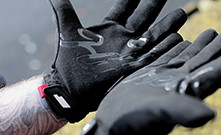
Mechanix Wear has searched for and field-tested several different versions of composite foams, each with a very specific offering and user interaction. On the dorsal side of the glove, there is the need for a protective foam composite that has the properties to disperse harsh and quick blow impacts without transferring discomfort to any of the 14 digital bones of the hand. A thicker and denser foam layered in single or various thicknesses over the back of the knuckles and wrist area handles the job of flexing and bending with the natural movements of the wrist while absorbing heavier or slower impacts. With the many specialized and unique uses the 100+ styles of Mechanix Wear gloves are subject to, the palm sides of the gloves receive their fair share of attention. Not being satisfied with the “off the shelf” materials, Mechanix Wear desired a thinner, lighter and a more high performance impact absorption material. Using the newest M-PACT® glove, the Mechanix Wear’s R&D Department made sample after sample and tested the gloves for 2 seasons with NASCAR® and NHRA crews and with drillers on oil rigs and even with the heavy equipment operators used on the construction of a local Freeway. What material finally bubbled to the top was an all-new impact absorbing material named PORON XRD®.

Posted December 5, 2014 at 4:00pm